Related guides: Hydroponics for Beginners · DWC setup
Basil is a productive hydroponic herb when it receives strong, consistent light, a warm but not overheated root zone, and regular harvesting. It grows quickly enough to reveal problems early, but a crowded canopy or an overfilled reservoir can still lead to weak stems, poor airflow, and declining roots.
Pick the right basil
Genovese, sweet, Thai, lemon, and compact varieties can all be grown hydroponically. Compare mature height, leaf size, days to harvest, and flavor before choosing. Compact basil is easier in a small tower or countertop system; tall Genovese types need room and regular pruning.
Start basil from seed or cuttings
Seeds can be started in rockwool or another clean, transplantable medium. Keep the plug evenly moist during germination and provide gentle light as soon as seedlings emerge. Do not leave the stem base submerged, and avoid keeping the medium saturated once roots begin extending.
Cuttings can root quickly in clean water or a suitable propagation medium. Move a rooted cutting into the hydroponic system without tearing its new roots, then give it moderate light for recovery before increasing intensity.
System choices
Basil fits Kratky, DWC, drip, NFT, and tower systems when the root space and harvest plan match the plant. A passive container is quiet and simple for one or two plants. DWC provides active aeration but depends on the air pump. A circulating system can support many plants, but clogged lines or a failed pump affect the whole crop.
Use an opaque reservoir and keep the crown above the nutrient solution. For DWC, leave an air space beneath the net pot after roots reach the reservoir. For drip or media systems, confirm the root zone drains between irrigations rather than staying waterlogged.
Light, temperature, and airflow
Basil needs enough light to build dense leaves and sturdy stems. Weak light causes stretching and large gaps between leaves. Excessive heat can reduce quality and increase water use. Keep the fixture at a measured canopy distance, monitor leaf temperature, and use gentle airflow through the canopy.
A consistent light schedule is more useful than changing the schedule every few days. The DLI calculator can help estimate daily light when you have a PPFD measurement. Watch the plant as the canopy grows because the distance from the fixture changes.
Nutrients and water management
Use a complete hydroponic fertilizer at a measured dilution. Basil can grow quickly, but stronger fertilizer is not automatically better. Excess dissolved salts can stress roots and produce leaf-edge damage. Mix nutrients into the actual water volume and record the product, dose, and date.
Test pH and EC consistently when possible. PPM values depend on the conversion scale, so record the scale with each reading. The EC to PPM calculator and PPM to EC calculator are conversion tools, not feeding recommendations.
Check reservoir level and temperature alongside nutrient readings. A rapidly falling reservoir may indicate a thirsty plant, a leak, or excessive heat. A sudden pH change may reflect plant uptake, water alkalinity, evaporation, or root problems.
Prune and harvest correctly
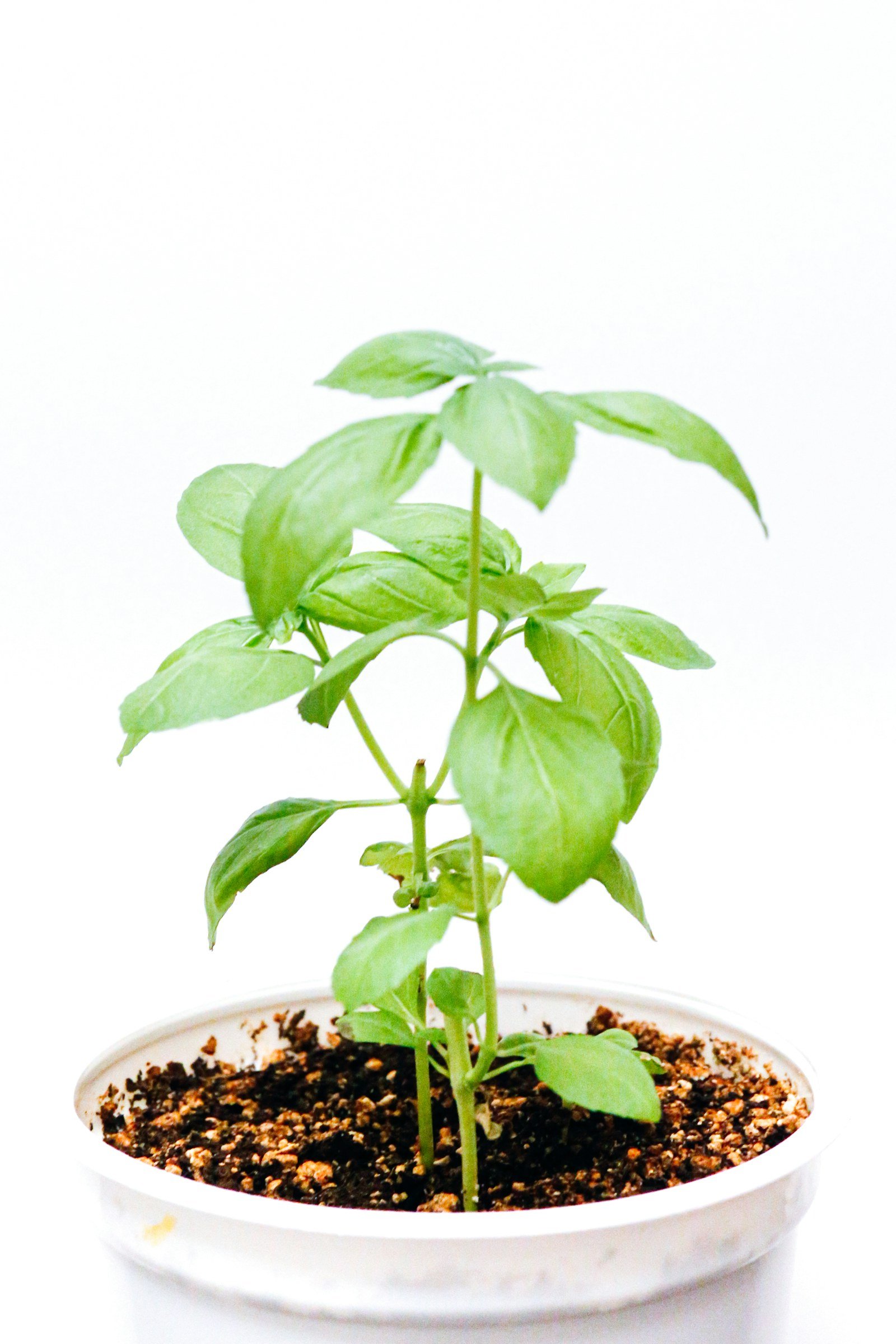
Begin pinching or cutting basil after the plant has several healthy leaf sets. Make the cut just above a pair of leaves so two new branches can develop. Harvest regularly rather than allowing one long stem to dominate the plant. Remove flower buds if the goal is continued leaf production and flavor.
Never strip all leaves at once; the plant needs foliage to keep producing energy. If you want seed, allow a selected plant to flower while keeping other plants in vegetative growth. Take a clean cutting from soft new growth when an older plant becomes woody or flower-heavy.
For the next step, see the propagation guide.
Keeping basil productive
Make the first pruning cut above a healthy pair of leaves, then allow side shoots to develop before cutting again. Harvest the longest stems first so the canopy stays open. Succession planting prevents a single aging plant from carrying the entire harvest. Start new seeds or cuttings before current plants reach their final size.
Label varieties and dates because basil can look similar while differing in vigor, leaf size, and tendency to flower. A short record of light schedule, nutrient readings, harvest weight, and time to flowering helps identify which variety fits your system.
Spacing and succession
Give basil enough space for air movement and harvest access. Crowded stems create shade and humidity, hide pests, and make it difficult to inspect the root zone. Start a new cutting or seed batch before the oldest plants become woody so harvests do not stop suddenly.
Common basil problems
| Symptom | First checks |
|---|---|
| Leggy stems | Light intensity, fixture distance, crowding, and variety |
| Small pale leaves | Light, root health, pH, EC, temperature, and plant age |
| Black or soft stem base | Constantly wet crown, poor airflow, root-zone sanitation, and water level |
| Leaf-edge browning | Heat, airflow, water consistency, nutrient strength, and root function |
| Wilting | Water level, pump or air pump, roots, heat, and recent pruning |
| Flowers too early | Variety, plant age, heat, light, and harvest schedule |
Pests and disease prevention
Inspect the undersides of leaves and new tips each week. Crowded, humid foliage makes pests harder to see and slows drying. Remove badly damaged leaves, isolate an affected plant when possible, and identify a treatment approved and appropriate for the crop before applying anything to an edible system.
Clean hands, scissors, trays, and reusable media between batches. Do not move water or tools from a suspect root zone into a healthy reservoir without cleaning them. Prevention is especially valuable in a shared recirculating system because one problem can travel to every planting site.
Harvest and hygiene
Use clean scissors and harvest above a healthy node. Remove damaged leaves from the growing area and keep cut material out of the reservoir. For edible crops, use clean water and equipment and follow normal food-safety practices after harvest.
Between crop cycles, drain old solution, remove roots, clean reusable parts, and inspect tubing and net pots. Algae and plant debris are easier to prevent than to remove from a mature root system.
Related guides
Review Hydroponics for Beginners for system selection and DWC setup for active aeration. The propagation guide covers seed and cutting preparation in more detail.