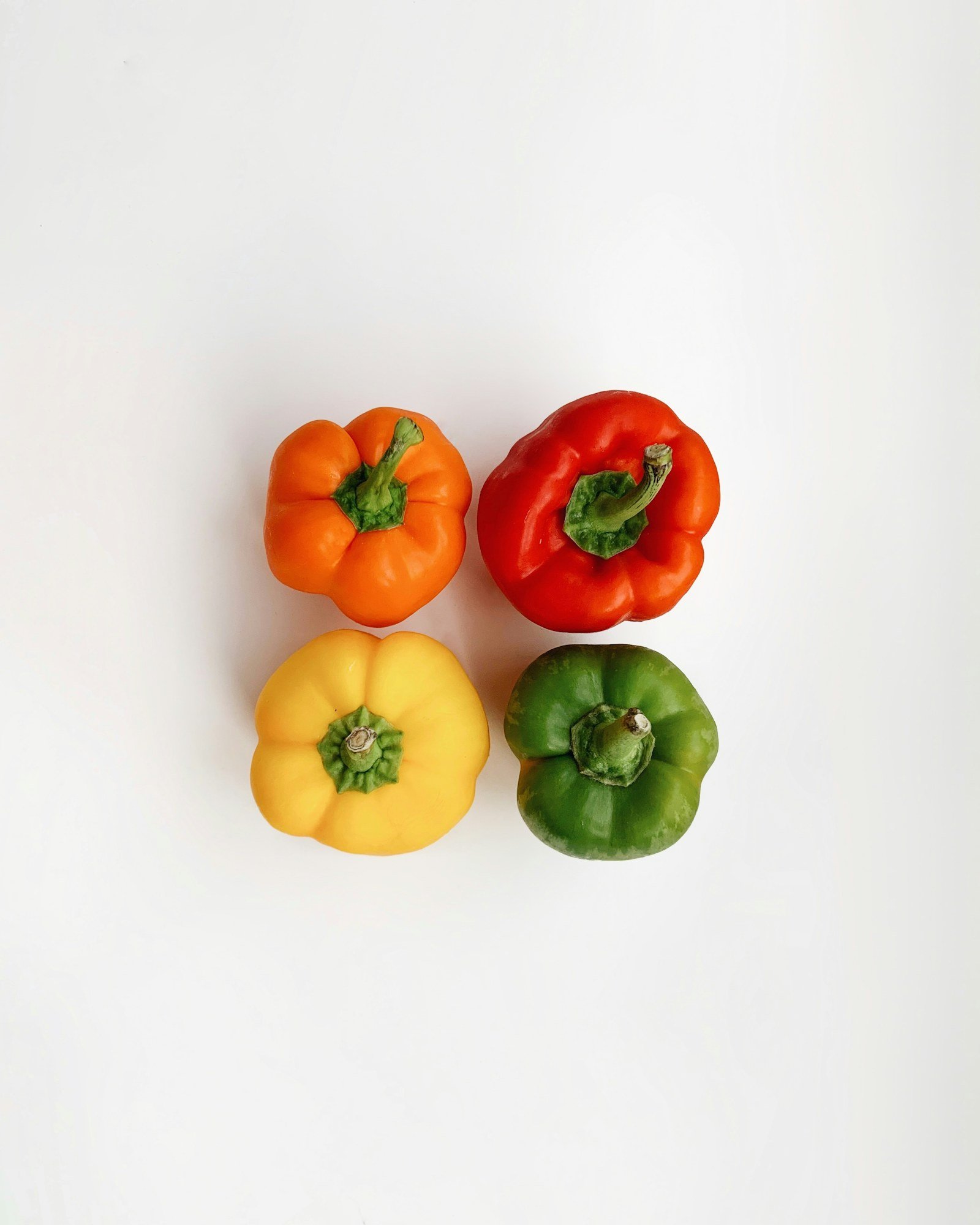
Peppers can produce hydroponically indoors, but a fruiting plant needs more canopy space and support than a shelf of herbs. Start with a compact cultivar, leave room around the mature plant, and plan for light, pollination, and steady root-zone conditions before transplanting.
Bell and hot peppers are both members of the genus Capsicum, but their mature size, fruit load, and time to harvest vary by cultivar. This guide explains a manageable home approach without promising one universal nutrient recipe or harvest date.
Choose a pepper that fits the room
Read the seed supplier’s description for mature height, width, and growth habit. A dwarf or compact type can be easier in a small indoor space, but “compact” does not mean a plant can live in a tiny cup forever. Fruiting peppers develop a larger root system, heavier branches, and a canopy that can shade itself. If you have limited room, start with one plant and check the expected mature size before buying the system.
Choose a cultivar suited to your goal: a small sweet pepper, a full-size bell, or a hot pepper. These are not interchangeable for size, fruiting pattern, or harvest stage. A seed packet’s days-to-maturity estimate is a planning reference, usually tied to the supplier’s stated conditions; it is not a reliable indoor calendar.
Choose a stable system and support it early
For a home plant, use a reservoir or substrate container with enough root volume and easy access for checking and cleaning. A large DWC bucket or a substrate-based drip setup can be adapted to peppers if the system is sized for the cultivar. A small lettuce raft or narrow channel may not provide enough space or support for a mature fruiting plant. HydroPosh’s DWC guide and system setup checklist cover the equipment basics.
Keep the reservoir opaque and stable, and protect it from direct light and room heat. If your system uses an air pump or water pump, test it before transplanting and make sure you can inspect roots without dismantling the whole setup. Keep cords and plugs away from splashes, use a drip loop, and avoid placing water equipment where a leak could reach a wall outlet.
Install a stake, cage, or other support while the plant is still easy to handle. Tie stems loosely so they can thicken, and add support before fruit makes branches heavy. Prune sparingly: remove damaged or crowded growth when needed, but keep healthy leaves that power the plant and shade fruit.
Plan light, temperature, and airflow
Fruit production needs a stronger, more even light environment than many leafy crops. Do not choose a fixture by wattage alone. Check its canopy coverage and PPFD map, position it at the recommended distance, and make sure lower leaves are not left in deep shade. HydroPosh’s indoor grow-light guide explains PPFD and DLI, and the DLI calculator can help estimate daily light from a measured intensity and photoperiod.
Keep air moving gently through the canopy and monitor temperature where flowers and leaves are growing. High heat can interfere with pepper fruit set; University of Florida greenhouse guidance notes that temperatures above 85°F can reduce fruit set in its production context. That is a caution point, not a universal cutoff for every cultivar or room. Avoid abrupt temperature swings and pay attention to the plant’s response as flowers form.
Feed with a complete product and track the solution
Use a complete hydroponic nutrient product labeled for fruiting crops, and follow its mixing sequence and dose. If the product has separate concentrated parts, dilute them into water one at a time as directed; do not combine concentrates directly. A nutrient schedule for leafy greens is not automatically appropriate for a pepper plant carrying fruit.
Where your system requires it, measure pH and EC with maintained meters. EC indicates the solution’s overall dissolved-salt conductivity, not the amount of a particular nutrient. Write down source-water readings, fertilizer amounts, top-offs, and changes in leaf or fruit condition. If a reading changes, first confirm the measurement, then check reservoir level, water source, roots, and recent mixing before changing the recipe. See the nutrient-mixing guide and water-quality guide for measurement basics.
Help indoor flowers set fruit
Pepper flowers can self-pollinate, but indoor air may provide less movement than outdoors. When flowers are open, gently shake the branch or tap the flower stem to help release pollen. Repeat as new flowers appear. This is a simple aid rather than a guarantee: temperature, light, plant health, humidity, and cultivar can all affect fruit set.
Once fruit begins to grow, keep the system stable rather than making several nutrient changes at once. Allow peppers to reach the size and color described for their cultivar. Many sweet peppers can be picked green or left to mature to another color; flavor and ripeness change as they remain on the plant. Use clean snips if pulling fruit risks breaking a branch.
Common pepper problems and what to check
- Flowers appear but fruit does not: gently vibrate open flowers, then check temperature, canopy light, and recent plant stress. Do not assume a nutrient deficiency first.
- Blossom-end rot: a sunken dark patch on the fruit can be associated with calcium not reaching developing tissue. Unsteady water supply, root stress, or high salt levels can interfere with uptake; adding calcium without checking those conditions may not help.
- Wilting while the reservoir is full: inspect roots, aeration, pump operation, and water temperature. Saturated roots still need oxygen.
- Leaves yellow or curl: note whether older or new leaves are affected and look for pests, heat, light stress, or root issues. Measure pH and EC before adjusting fertilizer, and change one variable at a time.
- Branches bend or split: add support and reduce handling. Pepper stems can break when loaded fruit is allowed to swing or pull on a weak branch.
Frequently asked questions
Do peppers need hand pollination indoors?
They may set fruit without it, but gentle vibration of open flowers can help move pollen in a still room. Also keep temperature and plant health suitable for flowering.
Can I grow bell peppers in a small apartment?
Yes, if you can provide a bright enough growing area, room for the mature canopy, safe water and electrical placement, and a support structure. Start with one compact cultivar rather than several full-size plants.
Can I use tomato nutrients for peppers?
Do not assume that one crop’s recipe is correct for another. Use a complete product whose label covers fruiting vegetables and follow the directions for your system and source water.
Sources
- University of Florida IFAS Extension, “Production of Greenhouse-Grown Peppers in Florida” — extension publication identifying the crop’s protected-culture production context. The Ask IFAS version is listed as no longer available; this EDIS journal record remains accessible.
- University of Florida IFAS Extension, “Crop Production—Florida Greenhouse Vegetable Production Handbook, Vol. 1” — greenhouse context for pepper fruit set and temperature; its observations are not a universal home-growing threshold.
- USDA National Agricultural Library, Hydroponics — overview of hydroponic crop systems and nutrient management.