Spinach can grow well in a small hydroponic system, but temperature is the first decision: it is a cool-season crop, and sustained warmth can trigger bolting, when the plant shifts toward flowering and leaves become less useful. Start with fresh seed, a cool, stable root zone, and a leafy-green nutrient product used according to its label.
This guide focuses on spinach’s specific needs rather than treating it like lettuce. A University of Georgia Extension greenhouse trial found that germination and heat response varied substantially among cultivars; its conditions and cultivar results are useful evidence, not a universal recipe for every home setup.
Choose a cultivar and a cool growing location
Look for a variety described by the seed supplier as suitable for your season or slower to bolt. “Slow to bolt” means it tends to stay in the leafy stage longer under the conditions tested; it does not mean a plant is immune to heat. Cultivar performance depends on temperature, day length, and the growing environment.
Plan a location where air and nutrient solution will not stay hot. In the University of Georgia Extension guide, spinach seed germinated best around 65–70°F (18–21°C), while the stated growth range was 60–77°F (15–25°C). Treat those figures as a useful reference from a Georgia controlled-environment publication, not a guarantee that every cultivar will thrive at every point in that range. Watch the plant and avoid long periods of heat, which can encourage bolting.
For indoor growing, measure near the leaves and at the reservoir rather than relying only on the thermostat across the room. Keep the reservoir shaded and check it during the warmest part of the day. A small fan can move air gently through the canopy, but strong drying airflow is not a substitute for controlling room heat.
Start seed evenly before moving it to the system
Spinach seed can germinate unevenly, and poor starts create gaps in a small system. Use fresh seed from a reliable supplier, follow the packet’s sowing depth, and keep the starting medium evenly moist rather than waterlogged. A plug or small cube gives you a transplantable seedling without disturbing its roots. HydroPosh’s rockwool seed-starting guide covers moisture and transplant timing if you use that medium.
Start a few extra seeds if the packet or your past experience suggests variable germination, then keep the strongest healthy seedlings. Do not leave seedlings crowded together for too long: crowded leaves receive uneven light and are harder to inspect. Move a seedling once it has established roots and can hold its first true leaves upright. Keep the plug supported in the net pot, but do not bury the crown (the point where leaves meet the stem) beneath the solution or medium.
Pick a simple system with reliable root access
Spinach is a leafy crop, so it does not need a tall trellis or the large root space required by a fruiting tomato. A small deep-water-culture or raft-style reservoir, a suitable NFT channel, or another leafy-green system can work when the crop has enough room and the roots stay oxygenated. Choose the system you can inspect and clean consistently, not simply the one with the most planting holes.
For a first attempt, grow a modest number of plants. Follow the spacing and mature-size information from the seed supplier so leaves are not packed tightly together. In a shared reservoir, leave access to check water level, pH, EC, and root appearance. The system setup checklist helps confirm the pump, air supply, and reservoir before planting.
Manage light and nutrients without a one-size-fits-all chart
Provide even light across the spinach canopy and adjust fixture height according to its manufacturer’s coverage map. If plants stretch, pale, or lean, check light at leaf level and plant spacing before changing the fertilizer. Our indoor grow-light guide explains PPFD and DLI; the DLI calculator can convert a measured light level and photoperiod into a daily total.
Use a complete hydroponic nutrient product labeled for leafy greens. Mix concentrates in the order on the label, measure pH and EC if your system requires them, and keep a log of readings and top-offs. EC measures the total conductivity of dissolved salts; it cannot identify a specific nutrient deficiency. Do not copy a commercial spinach recipe or fertilizer concentration from another farm without considering your source water, product, cultivar, system, and growth stage. The nutrient-mixing guide explains safe mixing and sampling.
Harvest leaves while the plant is still vegetative
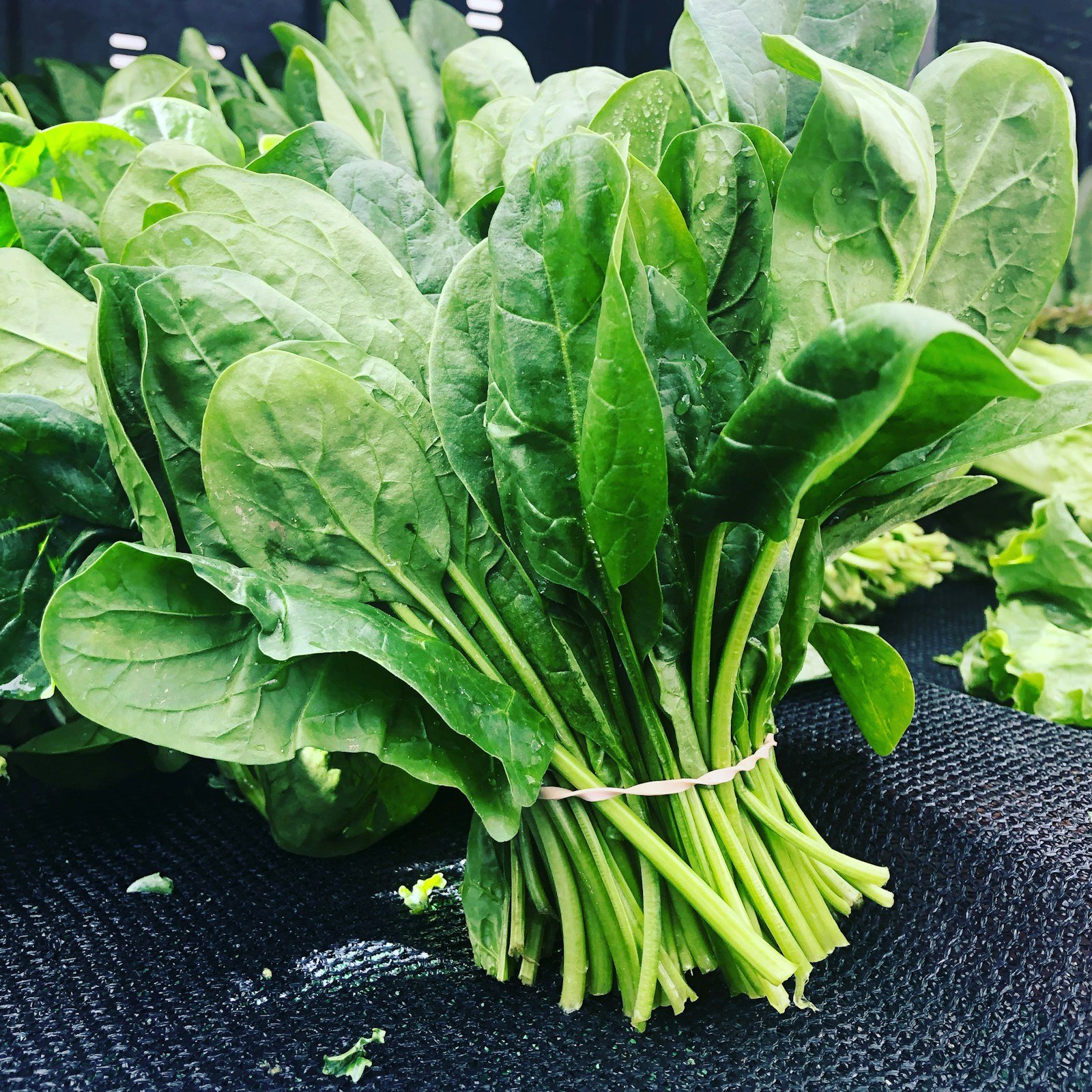
You can harvest young leaves as baby spinach or wait for larger leaves, depending on the seed variety and your preference. For repeated picking, take a few of the outer leaves and leave the growing point and enough healthy leaves for the plant to continue growing. For a single harvest, cut the plant near its base when it reaches the size you want. Check the seed supplier’s maturity estimate, but treat it as a guide: temperature, light, and cultivar change the pace.
Wash harvested leaves under clean running water and refrigerate them promptly. Remove damaged or slimy leaves from the system, and keep old plant material away from the reservoir. A clean harvest routine makes it easier to see whether new growth is healthy.
Troubleshoot the common spinach problems
- The plant sends up a flower stalk: this is bolting. Review recent heat exposure and cultivar suitability. Harvest usable leaves promptly; lowering the temperature may help future plantings but will not reverse flowering.
- Seeds emerge slowly or unevenly: check seed freshness, starting-medium moisture, and temperature. Cultivars can differ, so compare a small fresh batch before changing several system variables.
- Leaves are pale or growth is weak: check canopy light, root condition, pH and EC readings, and mixing accuracy. Change one factor at a time and record what happens.
- Roots look brown or smell unpleasant: inspect aeration, water temperature, reservoir cleanliness, and pump operation. Rinse or replace solution only as appropriate for the system; adding stronger fertilizer will not repair oxygen-starved roots.
- Plants crowd one another: thin the stand or harvest earlier. Better spacing improves access to the leaves and reduces shaded, damp pockets.
Frequently asked questions
Is spinach harder to grow hydroponically than lettuce?
It can be less forgiving of warm conditions and uneven seed starts. The same equipment may support both crops, but spinach benefits from careful temperature planning and a cultivar suited to the season.
Can spinach grow indoors year-round?
It can be grown indoors when you can keep the growing environment suitable, but year-round success is not automatic. Indoor heat, fixture output, cultivar, and room temperature still matter.
Can I use a lettuce nutrient for spinach?
Use a complete hydroponic product whose label supports leafy crops and follow its directions. Do not infer that identical crops need identical concentrations in every water source and system.
Sources
- University of Georgia Extension, “How to Grow Greenhouse Spinach During Georgia Summers Using Hydroponics” — cool-season behavior, tested temperature references, variation in germination among cultivars, and the limits of warm-season production.
- Cornell Controlled Environment Agriculture, Baby Spinach Handbook — commercial controlled-environment production context; its protocols should not be copied without adapting to a home system.