Hydroponic strawberries can produce fruit indoors, but a successful setup depends on more than putting roots in nutrient water. Choose a cultivar suited to indoor growing, keep the crown above the wet root zone, provide strong and even light, and plan how flowers will be pollinated in a room without bees.
Strawberries are self-fertile, meaning a flower can supply its own pollen, but pollen still has to reach the receptive parts of the flower. Outdoors bees and air movement help; indoors you may need to move pollen by hand or create gentle airflow. Cultivar and environment also affect the result, so treat any commercial production recipe as a starting point for research, not a home-growing guarantee.
Choose the plant type before choosing the system
For a small indoor project, look for a healthy, disease-free plant described as suitable for containers or protected growing. Day-neutral or everbearing types can flower over a longer period than June-bearing types, but the best choice depends on cultivar and conditions. The University of Minnesota Extension describes June-bearing, everbearing, and day-neutral types for home gardens; their outdoor calendar does not translate directly to a controlled indoor room.
Indoor performance is cultivar-specific. In a 2025 Ohio State University study published in Frontiers in Horticulture, researchers compared 23 strawberry cultivars under sole-source electric lighting and found differences in plant size, production, and fruit-quality traits. That study is evidence that cultivar selection matters, not proof that one variety will be best in every home system. Check the supplier’s mature size, flowering habit, and growing recommendations.
Use a vigorous, clean transplant rather than a plant with a damaged crown, soft roots, or visible pests. Bare-root plants should be kept from drying out before planting; potted plants should be gently eased from their container without tearing the roots unnecessarily.
Set the crown at the right height
The crown is the short central stem where leaves, roots, and flower stalks emerge. Set the plant so roots are supported and kept moist, while the crown and new leaves remain above the constantly wet medium. A crown buried in wet media can rot; a root system left exposed can dry out. In a net cup or substrate channel, secure the plant without packing media tightly over the crown.
After planting, check that the plant is stable and the roots can reach moisture. Do not solve drooping leaves by submerging the crown. Instead, inspect the root-to-water contact, irrigation pattern, airflow, and transplant stress. The hydroponic setup checklist can help you confirm the system is operating before the transplant goes in.
Use a system that keeps roots moist and aerated
Many home growers use a substrate or channel arrangement that delivers nutrient solution to the root zone and allows excess solution to drain. A well-managed recirculating system can work too, but roots still need oxygen and the crown should not sit under water. Pick a setup you can inspect, clean, and keep at a stable temperature. A narrow vertical tower may save floor space, but make sure each plant receives even light and that flowers and fruit remain accessible.
Start with a few plants rather than filling every opening. Strawberries spread by runners, and leaves and fruit need room for air to move. If your goal is berries, remove runners when they appear unless you intentionally want to propagate new plants. This keeps the growing area easier to manage and inspect.
Plan for light and room conditions
Flowering and fruiting require a useful amount of light over the whole canopy. Do not judge a fixture by wattage or a bright-looking phone photo. Check the light manufacturer’s coverage map and use a PAR meter or reliable measurement method if available. PPFD describes the light reaching the canopy at a moment; DLI describes the total daily light received. HydroPosh’s indoor grow-light guide explains the difference, and the DLI calculator handles the conversion.
Keep the canopy open enough for air to move around leaves and developing fruit. Remove damaged or old leaves with clean scissors, but keep healthy foliage. Avoid wetting flowers and fruit when watering. Warm, stagnant, humid air can encourage disease and poor fruit quality, so inspect the plant and room regularly rather than relying on a fixed timer alone.
Manage nutrient solution carefully
Use a complete hydroponic fertilizer labeled for fruiting crops or strawberries, and follow its instructions for concentration and mixing order. Formulations and recommended ranges vary with water source, cultivar, growing medium, and production stage. A research paper’s nutrient formula from a controlled chamber is not automatically right for a different fertilizer or home system.
If your system calls for pH and EC monitoring, use maintained meters and record readings. EC estimates the overall dissolved-salt conductivity; it does not identify which nutrient is present. Check the reservoir and root condition before changing concentration, and change one factor at a time. Our nutrient-mixing guide and water-quality guide explain safe measurement and troubleshooting.
Pollinate flowers and support fruit
When flowers open, use a small, clean soft brush to lightly touch the center of each flower, moving pollen among the anthers and the central pistils. Repeat as new flowers open. Gentle vibration of a flower cluster or soft airflow can also move pollen; do not aim a strong fan directly at the blossoms. A study of indoor strawberries compared several pollination approaches, including hand pollination and mechanical movement, but results from a controlled research setup do not guarantee the same yield in a home room.
Not every flower will become a well-shaped berry. Poor pollination can contribute to uneven fruit, while heat, humidity, low light, plant stress, and cultivar can also matter. Keep flowers and forming berries from touching damp surfaces. Use soft ties or a small support if a heavy cluster bends into the medium.
Harvest and maintain the plants
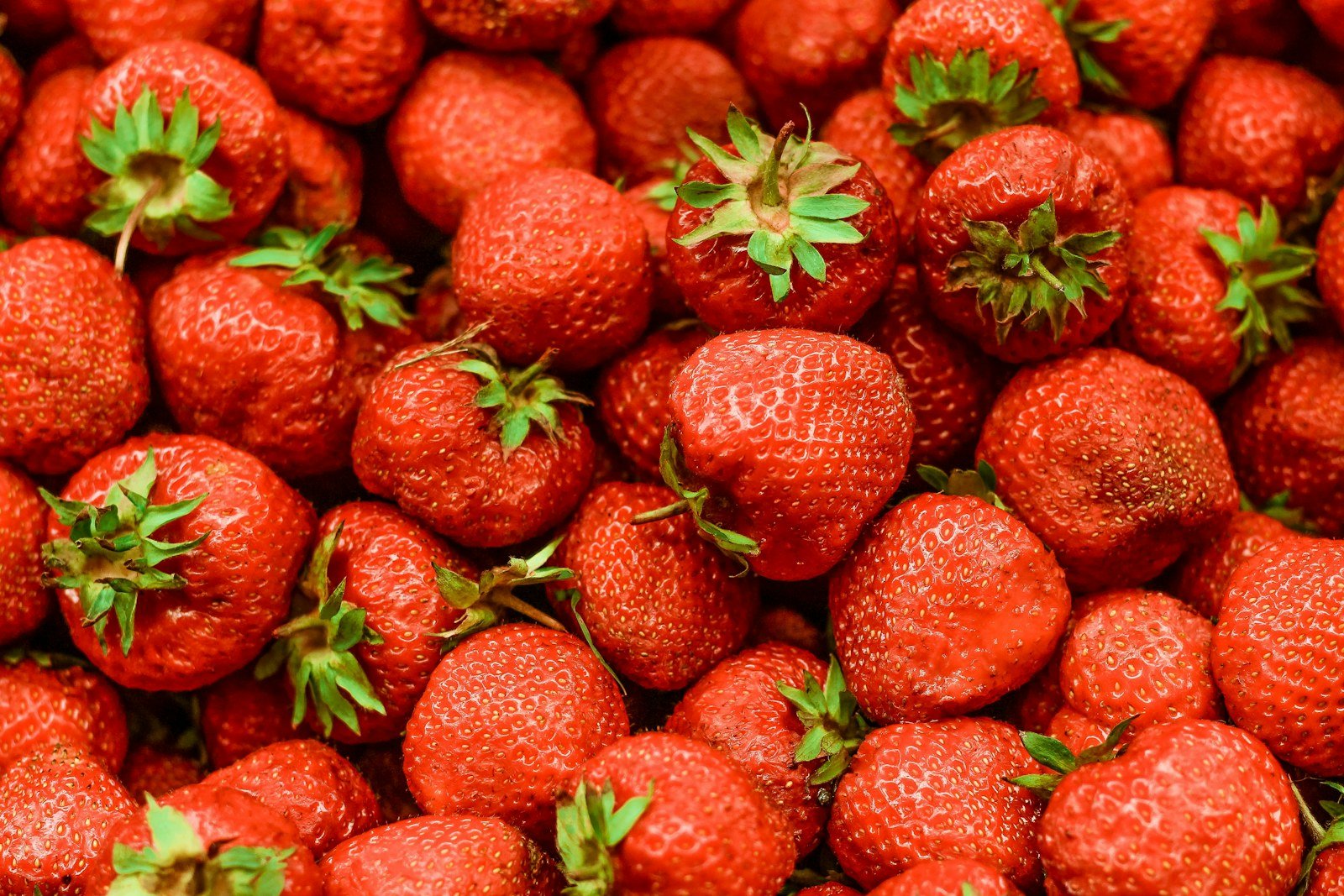
Pick berries when they are fully colored for the cultivar and still firm. Use clean scissors or pinch the stem rather than tugging on the plant. Remove overripe or moldy berries promptly, and clean away dead leaves. Wash harvested fruit under clean running water and refrigerate it if you are not eating it right away.
Keep notes on transplant date, first flowers, pollination, and harvest. The time from flowering to ripe fruit varies with cultivar and growing conditions; UMN Extension’s approximate outdoor flowering-to-harvest timing is not a reliable indoor schedule. Record what happens in your own room before scaling up.
Common problems to troubleshoot
- Leaves droop after transplanting: check that roots are moist but not suffocated, the crown is not buried, and light or airflow has not changed abruptly.
- Flowers dry up without berries: move pollen gently across open flowers, then check light, temperature, humidity, and plant stress.
- Berries are misshapen: review pollination and flower conditions, then check whether some flowers were damaged or the plant was under stress.
- Fruit or leaves develop mold: remove affected material, improve air movement, keep the canopy less crowded, and avoid wetting fruit.
- New growth is weak or pale: inspect roots and irrigation first, then check pH, EC, source water, and nutrient mixing before adding fertilizer.
- Many runners but little fruit: remove runners if berries are the priority, and review light and plant vigor.
Frequently asked questions
Do hydroponic strawberries need bees?
Not necessarily, but flowers need pollen movement for well-formed fruit. Outdoors bees commonly help; indoors, gentle hand pollination or suitable airflow can move pollen.
Can strawberries grow in a hydroponic tower?
They can, provided the cultivar fits the openings, roots receive dependable moisture and oxygen, and every plant gets light. Keep fruit accessible and avoid a crowded canopy.
Can I use the same nutrient mix as lettuce?
Do not assume the same recipe fits both crops. Use a complete product whose label covers fruiting crops, then follow its directions for your water and system.
Sources
- Lin et al., Ohio State University and collaborators, Frontiers in Horticulture (2025) — a controlled indoor comparison of 23 strawberry cultivars; supports the point that cultivar and environment affect growth, production, and fruit traits.
- University of Minnesota Extension, “Growing strawberries in the home garden” — home-garden strawberry types, crown and plant basics, self-fertility, and the role of pollinators; outdoor calendars and recommendations are not presented as hydroponic prescriptions.