Yes, tomatoes can grow hydroponically indoors, but they need more room, light, support, and ongoing attention than lettuce or herbs. For a first crop, choose one compact, disease-resistant cultivar, give its roots a stable reservoir or a well-managed substrate system, and plan for pollination before the flowers open.
This guide focuses on the practical differences between an indoor hydroponic tomato and a small leafy-green setup. It does not promise a fixed harvest date or one nutrient recipe: cultivar, lighting, temperature, system, and product labels all affect results.
Choose a tomato and system that fit your space
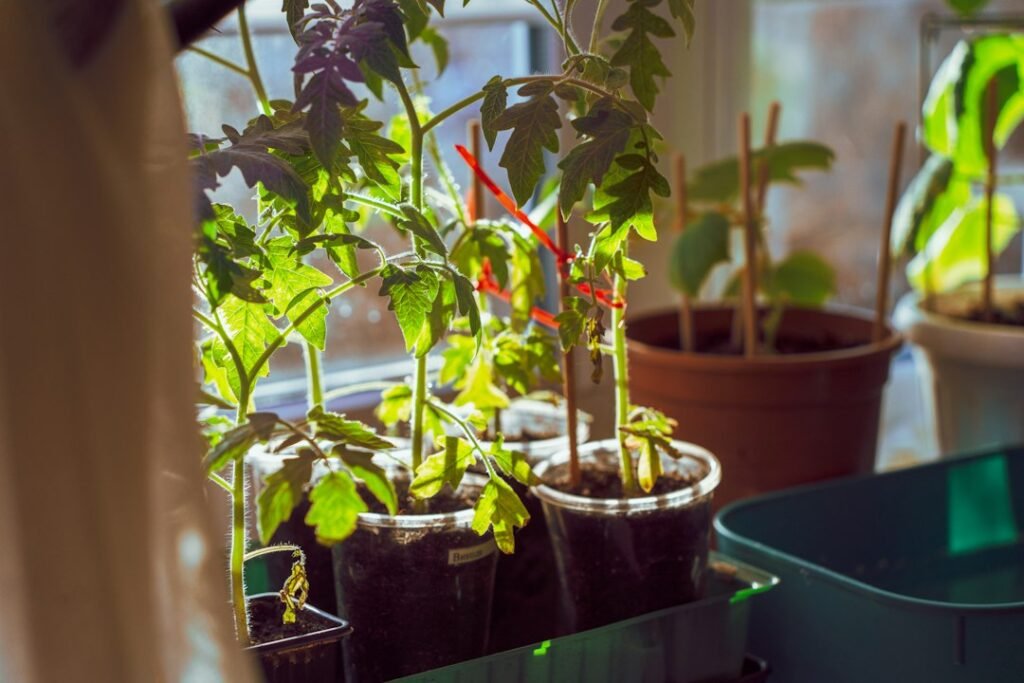
Read the seed or plant label for mature size and growth habit. A compact or dwarf tomato is easier to manage under a ceiling than a vigorous indeterminate vine. Indeterminate tomatoes keep extending the main stem and can become tall; even compact plants need a support plan once fruit adds weight. If reliable fruit is the goal, choose a cultivar suited to indoor or greenhouse growing rather than relying on a seed saved from an unknown grocery-store tomato.
For one plant, use a system with enough root volume and access for cleaning. A recirculating deep-water-culture (DWC) bucket or a substrate container supplied with a complete nutrient solution can work when sized for the mature plant. A very small reservoir needs frequent checking because a fruiting plant can use water quickly. A passive jar method is generally a poor fit for a large, long-lived tomato: it offers little control as the root mass and water demand grow.
Before buying equipment, check that the container is opaque, food-safe, stable, and easy to drain or clean. Keep electrical connections dry and use a drip loop on cords. For a pump-driven system, confirm that the pump, tubing, air supply, and any timer work before transplanting. The hydroponic setup checklist covers the general pre-plant checks, and the DWC guide explains that system in more detail.
Give the canopy enough usable light
Tomatoes grown for fruit need a stronger and more even light environment than a windowsill herb. A fixture’s wattage alone does not tell you how much light reaches the leaves. Check the manufacturer’s coverage and canopy-level PPFD map, then consider the daily light integral (DLI), which combines light intensity and hours. Our indoor grow-light guide explains PPFD and DLI, and the DLI calculator can help with the arithmetic.
Keep the light at the height and distance recommended for the fixture, and raise or adjust it as the plant grows. Watch the whole canopy: a lamp close to the top may leave lower branches shaded, while a lamp too close can bleach or stress leaves. If the room becomes hot or humid, improve air movement and monitor the plant rather than solving every symptom by moving the light abruptly.
Start with clean water and a complete tomato nutrient
Use a hydroponic fertilizer labeled for fruiting crops and follow its mixing order and dose. Many products have separate parts that should be diluted into water one at a time; never combine concentrated components unless the label specifically directs it. Do not use a leafy-green feeding schedule by default, and do not add extra calcium or other salts just because a leaf or fruit looks unusual.
Measure pH and electrical conductivity (EC) with calibrated meters if your system relies on nutrient solution. EC estimates the solution’s total dissolved salts; it does not show which individual nutrients are present. Record the starting water, solution readings, top-offs, and plant response so you can see a trend. Follow the fertilizer manufacturer’s crop-stage directions and adjust only after checking water quality, root health, and recent changes. HydroPosh’s nutrient-mixing guide and water-quality guide explain those checks.
Support, prune, and pollinate the plant
Install a stake, cage, or overhead string before the plant becomes heavy. Tie the stem loosely with soft plant clips or ties, leaving room for it to thicken. Remove leaves that are dead or touching wet surfaces, and keep enough foliage to shade fruit and support growth. Pruning depends on the cultivar and training system; do not strip a compact plant or remove healthy growth simply to make it look tidy.
Tomato flowers contain both male and female parts and can self-pollinate, but pollen still has to move within the flower. Outdoors, wind and insects help. Indoors, gently vibrate each open flower cluster for a second or two, using a clean electric toothbrush near the stem or a careful tap. Repeat as new clusters open. This encourages pollen release; it does not guarantee fruit set if temperatures, humidity, light, or plant health are unsuitable.
Keep the room within a reasonable growing range for the cultivar and avoid prolonged heat or cold. University of Florida greenhouse guidance notes that high temperatures can impair pollination and fruit set. If flowers drop, check the room temperature and airflow, then review light and root-zone conditions before changing the nutrient recipe.
Keep water conditions steady as fruit develops
Check the reservoir level and system operation regularly. Top off with water as needed, but do not treat a top-off as a full nutrient change; use the product label and your measured trend to decide when a solution change is appropriate. In a substrate system, maintain the irrigation pattern recommended for that medium and keep drainage unobstructed. Avoid letting roots dry out and then flooding them suddenly.
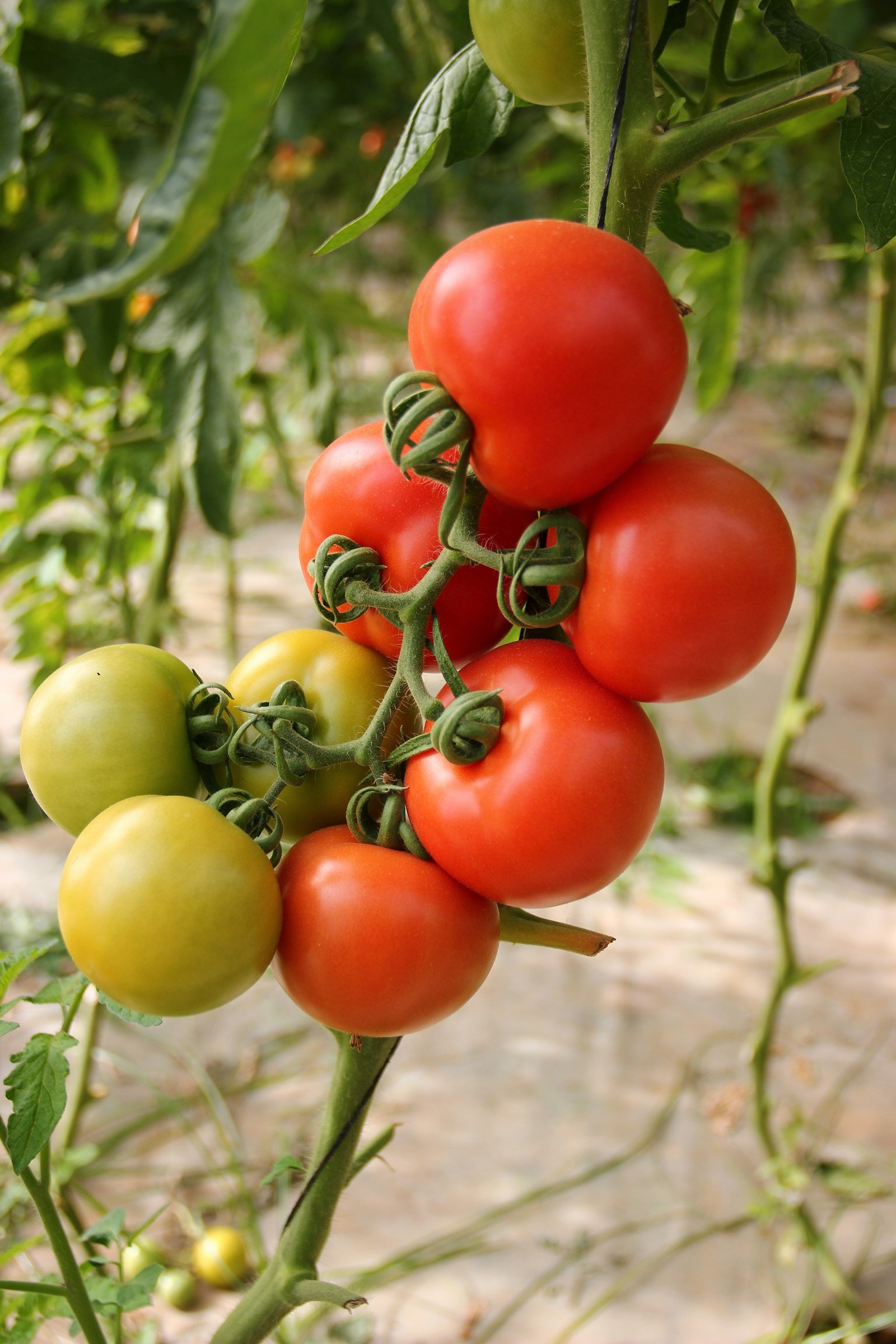
Blossom-end rot appears as a dark, sunken patch at the blossom end of a fruit. It is associated with inadequate calcium reaching developing tissue, but that does not automatically mean the solution lacks calcium. Irregular water supply, damaged roots, or excess salts can interfere with calcium uptake. Check moisture consistency, root condition, and solution measurements before adding supplements. Remove badly affected fruit and stabilize the system.
Common problems to check first
- Flowers drop without fruit: confirm that flowers are being vibrated, then check temperature, humidity, light, and whether the plant is under stress.
- Leaves yellow: note whether older or newer leaves are affected. Check pH and EC, water source, roots, and recent feeding changes before diagnosing a deficiency.
- Wilting with wet roots: inspect aeration, pump flow, root color and smell, and water temperature. Do not add fertilizer to a plant with a failing root zone.
- Fruit stays small or ripens unevenly: review cultivar, canopy light, fruit load, leaf health, and support. Do not assume one nutrient is the cause.
What to expect from an indoor crop
Tomatoes take longer and demand more space than a quick leafy-green crop. Germination, transplanting, flowering, and ripe fruit each depend on the cultivar and conditions, so use the seed packet or supplier’s timeline as a starting estimate rather than a promise. Keep notes from sowing through harvest. If you are new to indoor growing, one healthy plant is a better first test than filling every available space.
Frequently asked questions
Can I grow a tomato hydroponically in an apartment?
Yes, if you can provide adequate light, stable support, ventilation, and a safe place for water and electrical equipment. A compact cultivar and one-plant setup are more manageable than a large vine.
Do hydroponic tomatoes need hand pollination?
Indoor flowers often benefit from gentle vibration because the room lacks outdoor wind and insect activity. Vibrate open flower clusters as they appear, while also keeping temperature and plant health suitable for fruit set.
Can I use the same nutrients as lettuce?
Do not assume so. Choose a complete product labeled for fruiting crops and follow its instructions. Crop stage, source water, and system affect the appropriate concentration.
Sources
- University of Florida IFAS Extension: Production of Greenhouse Tomatoes — cultivar choice, greenhouse crop management, temperature concerns, and indoor/greenhouse flower vibration for pollination.
- University of Florida IFAS Extension: Nutrient Solution Formulation for Hydroponic Tomatoes — crop-stage nutrient management in specific commercial systems; recommendations should not be copied blindly to a different cultivar or home setup.