Related guides: root-zone diagnosis guide · water-quality guide
A hydroponic plant grows well when four linked systems work together: the root zone, nutrient solution, light environment, and air environment. Hydroponics is not a shortcut around plant biology; it is a way to make the root-zone conditions more visible and adjustable.
The root zone is a living interface
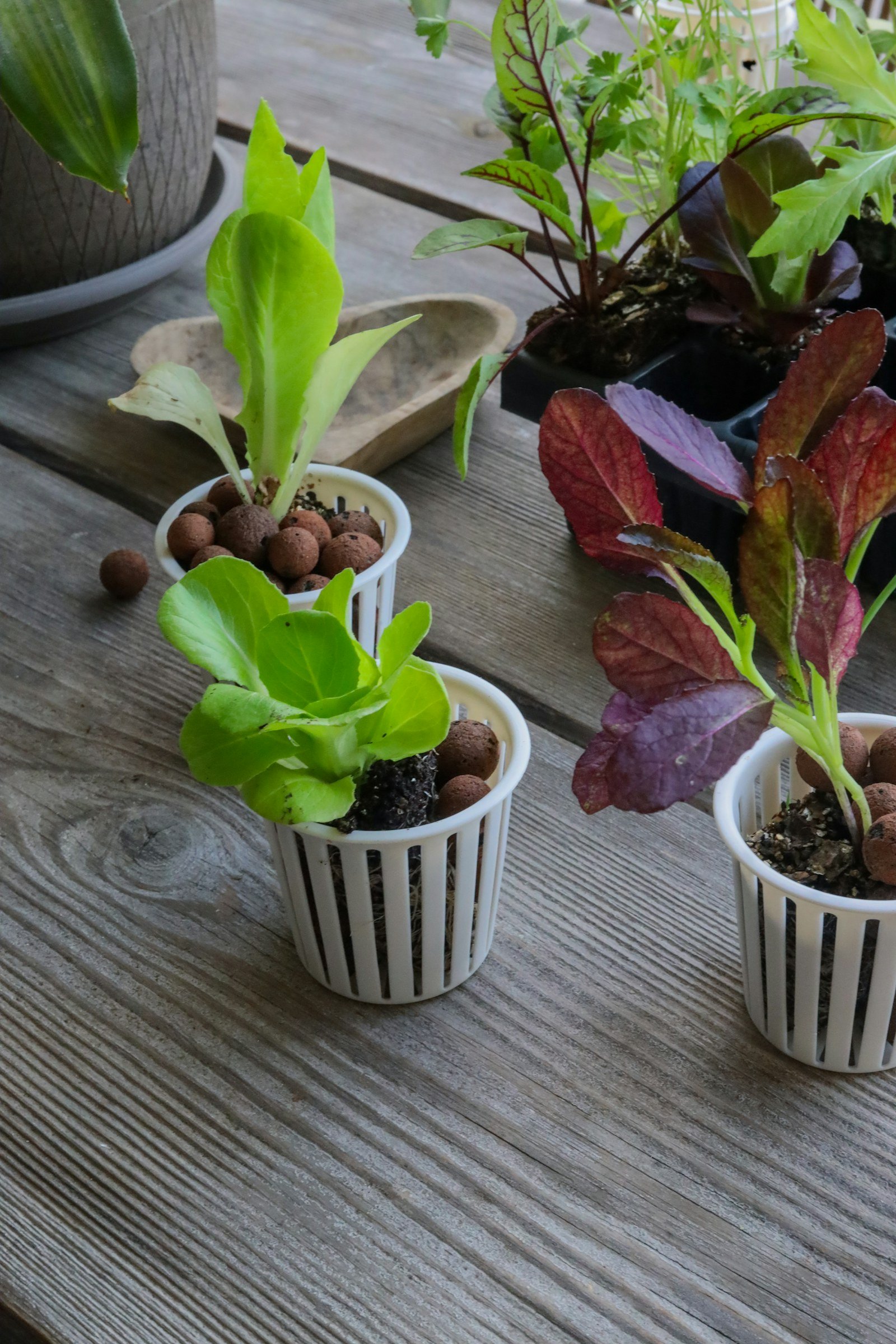
Roots need both water and oxygen. A completely flooded space can become oxygen-poor unless it is aerated or constantly renewed, while a dry channel or empty reservoir creates the opposite problem. The balance depends on the system, media, temperature, and crop.
Healthy roots vary by crop and media, but firm tissue, a clean smell, and steady new growth are more useful clues than color alone. Slime, rapid browning, tissue that sheds easily, or a sour smell deserve attention before you add more fertilizer. Start with the root-zone diagnosis guide if the roots look abnormal.
The solution carries more than food
Water transports dissolved ions, but its starting chemistry matters. Alkalinity can drive pH upward; sodium and other salts can raise EC without providing a useful nutrient balance. EC is a conductivity signal, not a complete nutrient diagnosis. The same fertilizer label can behave differently in different source water.
Mix nutrients in the order the manufacturer recommends, use the label’s water volume, and measure after the solution has mixed. The water-quality guide explains why source water belongs in the diagnosis, while the EC to PPM calculator can convert a reading without pretending that conversion identifies a nutrient deficiency.
For the next step, see the the beginner setup guide.
Light and air set demand
More useful light can increase photosynthesis, but only if water, carbon dioxide, temperature, and nutrients can support the resulting demand. A plant under strong light may transpire faster and concentrate a reservoir as water leaves more quickly than salts. Use PPFD and photoperiod together rather than judging a fixture by wattage alone.
Airflow helps move heat and reduces stagnant humidity around leaves, but a fan should not blast tender seedlings. Indoor growing is a balance between supply and demand, not a contest to maximize every dial. The DLI calculator is useful when you need to relate a light reading to a schedule.
A practical diagnostic order
- Inspect roots, water level, temperature, and visible light leaks.
- Measure pH and EC from a mixed, representative sample.
- Check canopy light, photoperiod, airflow, and recent room changes.
- Change one variable at a time and watch new growth before judging the result.
That order keeps a leaf symptom from sending you straight to a stronger nutrient recipe when the root zone or environment is the actual limit. For a first setup, compare this overview with the beginner setup guide and the system overview.
Cornell Controlled Environment Agriculture; University of Missouri Extension.