Related guides: Hydroponics for Beginners guide · Kratky guide
Hydroponics is a way to grow plants without ordinary garden soil. The grower supplies water, mineral nutrients, oxygen, light, and physical support through a planned root-zone system. A passive jar, an aerated bucket, a flowing channel, and a vertical tower can all be hydroponic systems, but they do not manage water and oxygen in the same way.
What hydroponics replaces
In soil, roots grow through a mixture that provides physical support, water storage, air spaces, and access to nutrients. Hydroponics separates those jobs. A net pot, rockwool cube, clay pebbles, or another growing medium supports the plant. A reservoir or irrigation line carries dissolved nutrients. Air enters the root zone through an air gap, moving water, or an air pump. The grower then controls the light and the conditions around the leaves.
This does not mean hydroponics eliminates the needs plants have in soil. Roots still need water, oxygen, nutrients, suitable temperature, and protection from pathogens. Hydroponics simply makes those requirements more visible and more dependent on the equipment and routine used by the grower.
How a hydroponic system delivers plant needs
| Plant need | How a hydroponic system supplies it | What the grower watches |
|---|---|---|
| Water | Reservoir, wick, drip line, or flowing solution | Level, temperature, leaks, and drying |
| Nutrients | Measured fertilizer dissolved in water | Product label, EC or PPM convention, and plant response |
| Oxygen | Air gap, air stone, moving water, or exposed roots | Root condition, aeration, flow, and temperature |
| Support | Net pot, media, raft, trellis, or plant clips | Stability, root space, and mature plant size |
| Light | Sunlight or a grow light | Canopy intensity, daily duration, heat, and shadows |
The main hydroponic system types
Kratky and other passive reservoirs
A Kratky-style system holds a plant above a nutrient reservoir without a continuously running pump. As the plant uses water, the level falls and creates an air gap for developing roots. The method is quiet and simple, but the reservoir size and crop choice matter. Leafy greens and herbs are usually easier than large, thirsty fruiting plants.
The most common beginner error is filling the reservoir so high that all roots remain submerged. The root zone needs access to both moisture and air. Keep the plant stable, block light from the solution, and measure the working volume before mixing nutrients.
Deep water culture
In deep water culture, roots sit in a reservoir that is actively aerated with an air pump and air stone. The system provides a large water supply and direct access to pH, EC, and temperature, but the pump becomes important equipment. If aeration stops or water becomes too warm, the roots can lose oxygen quickly.
DWC is useful for learning reservoir management and can support larger plants than a small passive jar when the container, light, support, and nutrient routine match the crop.
Nutrient film technique
NFT sends a shallow film of nutrient solution through sloped channels. Roots receive moving water and air, while the solution returns to a reservoir. The system can use water efficiently and suits many leafy greens, but a pump or blocked channel can interrupt the whole root zone. NFT needs accurate leveling, a reliable return path, and regular inspection.
Ebb and flow
An ebb-and-flow system periodically floods a growing bed and then drains it back to a reservoir. The cycle wets the media and then restores air spaces. A timer, pump, drain, and flood height must work together. Test the system with plain water before adding plants, and check for slow leaks around fittings.
Vertical towers
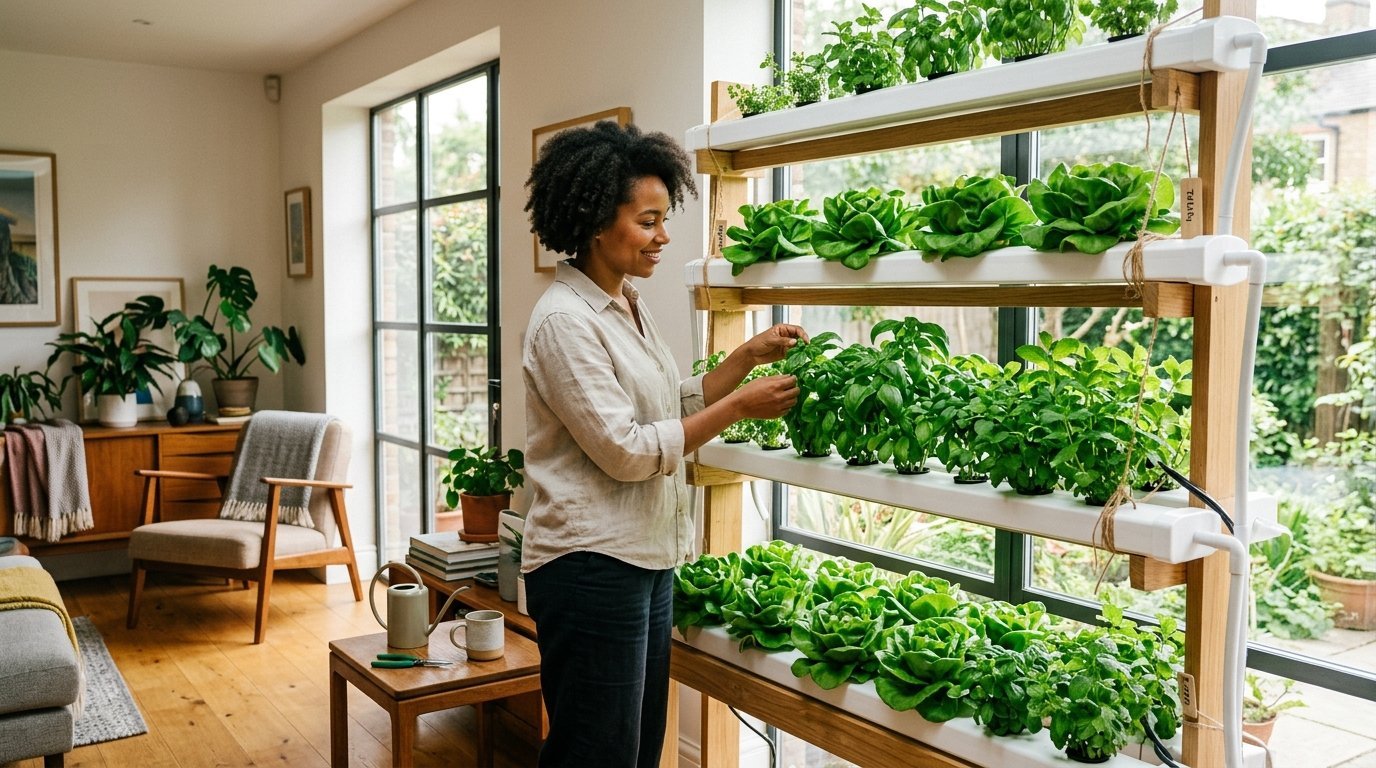
A tower moves nutrient solution upward and distributes it through stacked planting sites. Towers save floor space, but upper and lower sites may receive different light and water flow. Leafy greens, herbs, and compact strawberries are often easier starting crops than large tomatoes or cucumbers. Keep the tower stable, the pump protected from running dry, and the reservoir opaque.
What beginners need to measure
Start with the simplest measurements that answer a real question. Mark the reservoir’s working volume. Record the water source, nutrient product, date, pH, EC if available, light schedule, and plant stage. A written baseline helps you distinguish a gradual trend from a single unusual reading.
EC measures electrical conductivity and gives an indication of dissolved salts. PPM is a conversion convention, not one universal measurement. Different meters use different scales, so record the scale with the reading. The EC to PPM calculator and PPM to EC calculator are useful only when the selected scale matches the meter or chart being used.
pH affects nutrient availability. A reading outside the crop’s useful range can make some nutrients harder for roots to access, but a rapid correction can also stress the plant. Test equipment should be calibrated, measurements should be taken consistently, and large changes should have a clear reason.
For the next step, see the DWC guide.
Light is still the engine of growth
A nutrient solution cannot compensate for weak light. Leafy greens may need less intensity than fruiting tomatoes, but every crop needs enough usable light to build energy. Keep the fixture adjustable, watch leaf temperature, and avoid placing a light so far away that plants stretch.
DLI describes the total amount of photosynthetically useful light delivered across a day, while PPFD describes the instantaneous intensity at a location. They answer different questions. The DLI calculator can help translate a PPFD reading and light schedule into a daily estimate, but the crop, fixture, distance, and canopy still need observation.
Common hydroponic problems
- Cloudy or warm water: block light, inspect roots, improve aeration or flow, and investigate temperature before adding products.
- Yellow leaves: check light, pH, EC, root health, water temperature, and plant age before assuming a deficiency.
- Root rot: look for dark, soft, foul-smelling roots and review oxygen, temperature, sanitation, and water level.
- Algae: light is reaching wet nutrient solution or media. Cover gaps and clean the system between crops.
- Slow growth: compare light, crop stage, root space, temperature, and nutrient strength rather than increasing fertilizer automatically.
- Leaks and pump noise: stop the system, repair the physical cause, and run a plain-water test before returning plants.
Food safety and electrical safety
Use clean water and clean equipment for edible crops. Remove dead roots and plant debris, keep reservoirs covered, and wash harvests according to normal food-safety practice. Do not use an unverified chemical treatment in a system that grows food.
Water and electricity require deliberate separation. Keep plugs and connections above possible splash levels, use appropriate protection for the location, create drip loops in cords, and disconnect power before working on a submerged pump. A backup plan for a pump or air-pump failure is especially important for systems that depend on continuous circulation.
Choosing a first system
Choose a passive Kratky container when you want a quiet, low-equipment experiment with leafy greens. Choose a small DWC bucket when you want to practice active aeration and reservoir measurement. Choose NFT, ebb and flow, or a tower when the crop and available time justify more plumbing and inspection.
A good first system is small enough to reach, easy to clean, and matched to the light you already have. The Hydroponics for Beginners guide can help turn the idea into a simple first routine, while the Kratky guide and DWC guide explain two common starting approaches in more detail.
Frequently asked questions
Do hydroponic plants need fertilizer?
Yes. Without soil, the grower must supply the mineral nutrients the crop needs through a suitable fertilizer product and measured water.
Can any plant be grown hydroponically?
Many plants can grow without soil, but system size, root space, light, support, pollination, and nutrient demand determine whether a crop is practical. Leafy greens and herbs are usually easier first crops than large fruiting plants.
Is hydroponics difficult for beginners?
It can be manageable when the system is small, the crop is forgiving, and the grower records water, light, and nutrient changes. Complexity rises with pumps, plumbing, large plants, and tight environmental control.